Convenience Store Security: A Practical Guide for Protecting Your Store
Convenience stores face a unique security challenge. They are open to the public, often operate late at night, and may have only one or two employees on duty during high-risk hours.
That makes security about more than preventing theft. A strong convenience store security program helps protect employees and customers. It also reduces losses tied to inventory, cash, and property damage.
The most effective approach is layered. No single tool can prevent every incident. But the right combination of security measures can deter crime, detect problems faster, and support emergency response. It can also help store owners document what happened after an event.
This guide explains how convenience store owners and managers can build a practical security program that reduces risk without making day-to-day operations harder.
Why Convenience Store Security Requires a Layered Approach
Convenience stores are often small, busy, and easy to enter. Customers move quickly through the store. Employees may need to watch the register while also stocking shelves or handling deliveries.
That creates several common security risks:
- Shoplifting and organized retail theft
- Robbery or attempted robbery
- Aggressive customer behavior
- Employee safety incidents
- After-hours break-ins
- Parking lot or fuel pump incidents
- Internal theft
- Vandalism
- Unauthorized access to stockrooms or offices
Late-night hours can increase these risks. So can poor lighting, blocked windows, limited staffing, and visible cash. Blind spots around the store can also make incidents harder to prevent or investigate.
A layered security strategy helps address these issues from multiple angles. The goal is not just to record incidents after they happen. The goal is to make the store less attractive to criminals, give employees better tools, and help managers respond quickly when something goes wrong.
Start With Visibility, Lighting, and Store Layout
Before investing in advanced technology, convenience stores should address the basics. Many security issues become worse when employees cannot see what is happening.
Good visibility begins outside the store. Parking lots and fuel areas should be well lit. Entrances, sidewalks, and rear doors should also be easy to see. Dark corners can make employees and customers feel unsafe. They also make it harder for cameras to capture useful details.
Windows matter too. Large posters or product displays can block the view into and out of the store. When the checkout area is visible from outside, employees are less isolated. Clear sightlines can also make the store less appealing to someone looking for an easy target.
Inside the store, shelves and displays should not create unnecessary blind spots. High-shrink areas should be positioned where staff can monitor them. If that is not possible, cameras should be placed where they can capture activity clearly.
These changes may seem simple, but they are often among the most cost-effective convenience store security improvements.
Use Security Cameras Where They Actually Help
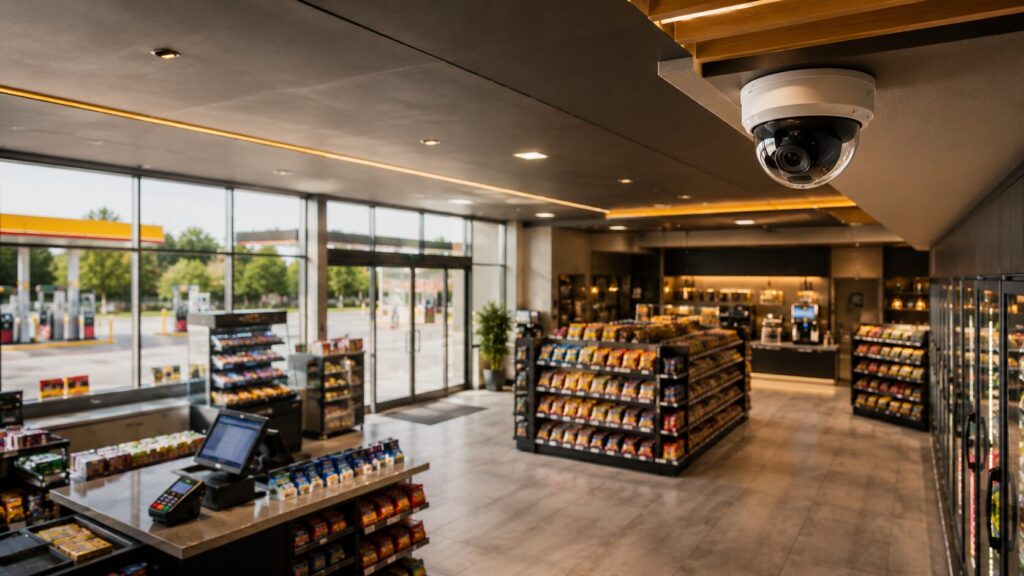
Security cameras are one of the most visible parts of a convenience store security system. But more cameras do not automatically mean better protection.
The key is useful coverage.
A convenience store camera plan should usually include:
- Main entrances and exits
- Checkout and POS areas
- Interior sales floor overview
- High-shrink aisles or coolers
- Rear doors and receiving areas
- Stockrooms and employee-only areas
- Parking lots and fuel areas, when applicable
Entrance cameras should be positioned to capture clear images of people entering the store. Wide-angle overview cameras can show movement across the sales floor, but they may not capture enough detail for identification.
Checkout cameras should provide a clear view of transactions and customer interactions. They should also help managers understand what happened if there is a dispute at the register.
Exterior cameras require careful planning. Parking lots and fuel pumps often need different camera angles than the sales floor. Rear alleys, dumpster areas, and delivery zones may need their own coverage. Lighting, weather, glare, and distance can all affect video quality.
The goal is to make footage useful in real-world situations. If an incident occurs, owners and managers should be able to answer basic questions quickly. Who entered the store? What happened at the register? Where did the person go? Was a vehicle involved?
Add Remote Video Monitoring for Higher-Risk Locations
Traditional video recording is valuable, but it is often reactive. Someone reviews footage after a theft, break-in, or disturbance has already happened.
Remote video monitoring can add a more proactive layer.
With remote video monitoring, trained professionals can review alerts and verify activity. When needed, they may be able to issue live audio warnings, contact store personnel, or request emergency response.
This can be especially valuable for convenience stores that:
- Operate late at night
- Have limited staff during certain shifts
- Experience repeated loitering or trespassing
- Have exterior risk areas behind the building
- Manage multiple locations
- Need better after-hours protection
Remote monitoring can also reduce the burden on employees. Frontline staff should not be expected to confront every suspicious situation on their own. A monitored system gives the business another layer of support when an event needs attention.
Protect Employees With Panic Buttons and Clear Procedures
Employee safety should be at the center of any convenience store security plan.
Panic buttons and silent alarms can help employees signal for help during a robbery or threat. These devices should be placed where employees can access them discreetly. Common locations include the register area and manager office.
But the equipment is only useful if employees know when and how to use it. Staff should be trained on what to do during a robbery or threat. They should also understand what to do after the immediate danger has passed.
A convenience store robbery response policy should be simple and practical:
- Do not argue or resist during a robbery.
- Use a panic button or silent alarm only if it is safe.
- Observe details without escalating the situation.
- Call 911 when the threat has left.
- Preserve the scene and avoid touching evidence.
- Separate witnesses so their memories are not influenced.
- Save video, POS records, and alarm event information.
Employees need to understand that their safety comes first. Merchandise and cash can be replaced. People cannot.
Strengthen Cash Handling and Register Security
Cash is one of the biggest risk factors in many convenience store robberies. Reducing the amount of accessible cash can reduce the incentive for robbery. It can also limit losses when an incident occurs.
Convenience stores should consider:
- Keeping limited cash in the register
- Using drop safes
- Making deposits frequently
- Posting signage that employees cannot open the safe
- Setting clear cash thresholds for register drawers
- Training employees not to discuss cash routines publicly
Cash handling policies should be consistent across shifts. Employees should not be left to decide on their own when to make a drop or how much money to keep in the drawer.
For multi-site operators, consistent cash procedures make it easier to compare locations. They also help managers spot exceptions and identify where additional training may be needed.
Use Access Control for Back-of-House Areas
Not every part of a convenience store should be easy to access.
Stockrooms, manager offices, and cash rooms should be protected from unauthorized entry. IT closets and employee-only areas may need the same protection. Traditional keys can work for small stores, but they become harder to manage as staffing changes or vendor access increases.
Access control systems allow owners and managers to decide who can enter specific areas and when. Permissions can be changed when an employee leaves. They can also be updated when a vendor no longer needs access.
Access control also creates an event history. If inventory goes missing or a restricted area is accessed at the wrong time, managers have a record to review.
For convenience stores, access control is especially useful for:
- Stockrooms
- Cash offices
- Manager offices
- Employee entrances
- Receiving doors
- IT or network equipment areas
When access control is integrated with video, managers can review both the door event and the related footage.
Connect Video With POS Activity
A lot happens at the register. Refunds and voids can create risk. So can no-sale drawer openings, age-restricted purchases, and customer disputes.
POS-video integration connects transaction data with video footage. Instead of searching through hours of recordings, managers can look up a transaction and review the related footage.
This can help investigate:
- Suspicious refunds
- No-sale drawer openings
- Voided transactions
- Customer complaints
- Cash shortages
- Employee training issues
- Disputed purchases
This type of integration is not only about catching theft. It can also help managers understand mistakes, improve procedures, and resolve customer issues more quickly.
Do Not Overlook Intrusion Detection and After-Hours Security
Convenience store security does not end when the doors are locked.
After-hours break-ins can lead to stolen inventory and damaged property. They can also result in lost revenue while repairs are completed. Stores with tobacco, alcohol, lottery products, or cash may be especially attractive targets.
A commercial intrusion system may include:
- Door contacts
- Motion detectors
- Glassbreak sensors
- Monitored alarm signals
- Rear-door protection
- Schedule-based arming and disarming
- Notifications for openings and closings
A good intrusion system should match the actual layout of the store. A rear receiving door may need different protection than a public entrance. A glass storefront may need different detection than a stockroom hallway.
Owners should also review who is responsible for arming and disarming the system. Missed arming, shared codes, and unclear closing procedures can weaken even a well-designed alarm system.
Include Fire, CO, and Life Safety Protection
Security is not only about theft or robbery. Convenience stores also need to protect people and property from fire, carbon monoxide, and other life safety hazards.
This is especially important for stores with fuel operations or foodservice equipment. It also matters for stores with long operating hours, refrigeration systems, or storage areas.
Commercial fire and life safety systems may include:
- Fire alarm monitoring
- Smoke detection
- Carbon monoxide detection
- Sprinkler monitoring
- Emergency notification
- Water detection in sensitive areas
These systems help protect employees and customers. They also support business continuity after an emergency.
Because fire and life safety rules vary by location, store owners should work with qualified professionals. Local authorities can also help confirm what is required for a specific building or operation.
Create Simple Security Policies Employees Can Follow
Technology is important, but policies turn security into a daily habit.
Convenience store employees need clear instructions for common situations. Policies should be short, specific, and easy to train. A long manual that no one reads will not help during a real incident.
Important policy areas include:
- Opening and Closing – Employees should know how to check the exterior before entering. They should also know how to verify alarm status, secure doors, and report anything unusual. If a store has repeated late-night risk, managers may need to review whether one-person opening or closing is appropriate.
- Cash Handling – Cash policies should define register limits and drop safe use. They should also explain deposit routines and what employees should do if they feel unsafe.
- Robbery Response – Employees should be trained not to resist. They should know how to activate a panic alarm if safe. They should also understand when to call 911 and how to preserve evidence afterward.
- Loitering and Trespassing – Staff should know when to notify a manager and when to contact authorities. They should also know how to document repeat problems. Employees should not be expected to physically confront people.
- Incident Reporting – Every serious event should be documented. Reports should include the date, time, type of incident, and people involved. They should also include evidence saved, police report information, and follow-up actions.
- Access and Key Control – Managers should know who has keys, alarm codes, and access credentials. Access should be updated immediately when employment or vendor relationships change.
Train Employees for Real-World Scenarios
Convenience store security training should be practical. Employees do not need abstract theory. They need to know what to do during the situations they are most likely to face.
Training should cover:
- Robbery response
- De-escalation basics
- Panic button use
- Suspicious behavior reporting
- Opening and closing procedures
- Emergency exits
- Alarm system use
- Video preservation
- Incident documentation
Short refresher sessions can be more effective than one long annual training. Managers should also review incidents after they happen and update procedures when needed.
For example, if footage from a theft misses the suspect’s face, the store may need to adjust a camera. If employees are unsure when to use the panic button, the business may need more scenario-based training.
Security should improve over time.
Measure Whether Your Security Program Is Working
A convenience store security program should be reviewed like any other business system. Owners and managers need to know whether incidents are decreasing. They also need to know whether employees are following procedures and whether response is improving.
Useful security metrics include:
- Shrink rate
- Robbery or threat incidents
- After-hours intrusion attempts
- False alarm frequency
- Time needed to retrieve video
- POS exceptions reviewed with video
- Access control exceptions
- Employee training completion
- Repeat incidents by location or shift
- Corrective actions completed after incidents
These metrics help operators move from guesswork to management. They can also help multi-location businesses identify which stores need more support.
How to Prioritize Convenience Store Security Improvements
Not every store needs the same system on day one. A small neighborhood store, a 24-hour fuel station, and a regional chain will have different needs.
A practical rollout often follows four stages.
1. Assess the Store
Start with a site review. Identify entrances, exits, cash handling points, and exterior risk areas. Then look for high-shrink products, employee-only spaces, lighting gaps, and blind spots.
2. Fix the Basics
Improve lighting and clear window clutter. Reduce accessible cash and define opening and closing procedures. Make sure employees know what to do during a robbery or emergency.
3. Build the Core Security System
Add or improve cameras, intrusion detection, and panic signaling. Make sure alarm response is monitored. Focus on useful coverage at entrances, checkout, rear doors, stockrooms, and exterior areas.
4. Add Advanced Layers
For higher-risk or multi-site stores, consider remote video monitoring and access control. POS-video integration, analytics, and centralized reporting can also help managers oversee risk more effectively.
This phased approach helps businesses prioritize the highest-risk gaps first while building toward a stronger long-term security program.
Build a Convenience Store Security Program Around People First
Convenience store security should not be built around technology alone. It should be built around people.
Employees need to feel supported. Customers need to feel safe. Managers need tools that help them understand what is happening in the store. Owners need systems that reduce losses and help the business recover quickly after an incident.
That requires a layered approach. Better visibility, smarter camera coverage, monitored alarms, and access control all play a role. Panic signaling, employee training, and clear response procedures are just as important.
Guardian Alarm helps convenience stores identify security gaps and build systems that fit their real operating environment. From the parking lot to the register, the right security program can help deter crime and detect problems faster. Most importantly, it can help protect the people who keep your store running.
Convenience Store Security FAQs
What is the best security system for a convenience store?
The best security system depends on the store’s layout, hours, staffing, location, and risk history. Most convenience stores benefit from a layered system. That may include security cameras, monitored intrusion detection, panic buttons, and access control for restricted areas.
Where should security cameras be placed in a convenience store?
Security cameras should cover entrances, checkout areas, and sales floor activity. Stores should also consider coverage for high-shrink products, rear doors, stockrooms, parking lots, and fuel areas. Entrance and checkout cameras should be positioned to capture useful detail, not just wide overview footage.
How can convenience stores reduce robbery risk?
Convenience stores can reduce robbery risk by limiting accessible cash and using drop safes. They can also improve lighting, train employees not to resist, install panic buttons, and use monitored security systems. Clear sightlines and visible security measures can also help deter crime.
Do convenience stores need panic buttons?
Many convenience stores should consider panic buttons or silent alarms. They are especially useful for stores that operate late at night, handle cash, or have limited staffing. Employees should be trained on when and how to use them safely.
What is remote video monitoring for convenience stores?
Remote video monitoring allows trained monitoring professionals to review alerts and verify suspicious activity. Depending on the system, this may include live audio warnings, contacting store personnel, or requesting emergency response.
How can access control help convenience stores?
Access control helps restrict employee-only areas such as stockrooms, manager offices, cash rooms, and receiving doors. It also creates a record of who accessed specific areas and when. That record can support investigations and improve accountability.
How often should convenience store security procedures be reviewed?
Security procedures should be reviewed at least annually and after any major incident. Stores with frequent theft, late-night operations, or multiple locations may need more frequent reviews.
