What If Guardian Alarm Existed in 1776?
Five Historic Alerts That Might Have Changed America
Every Fourth of July, Americans celebrate the people, moments, and decisions that shaped our nation’s history.
At Guardian Alarm, we’ve been helping protect homes and businesses since 1930—but it got us thinking:
What if Guardian Alarm had been around in 1776?
While we can’t rewrite history, it’s fun to imagine some of America’s most famous moments through the lens of modern security technology.
Here are five alerts that might have popped up on a monitoring screen during the founding of our nation.
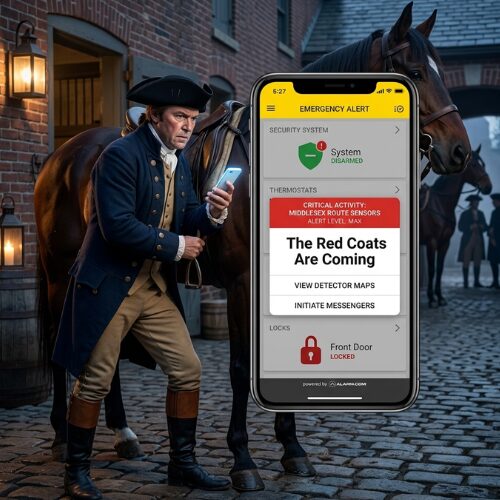
Alert #1: Paul Revere Receives a
Real-Time Notification
April 18, 1775 – 10:42 PM
Location: Massachusetts
Alert: Multiple military units detected approaching local communities.
Status: Verified.
Action: Real-time notifications issued.
Today, homeowners receive alerts instantly on their smartphones. Back then, Paul Revere had to ride through the night delivering the message himself. His famous midnight ride warned colonial militias that British troops were on the move, helping prepare communities for the events that would ignite the American Revolution. Technology may have changed, but the importance of timely information hasn’t.
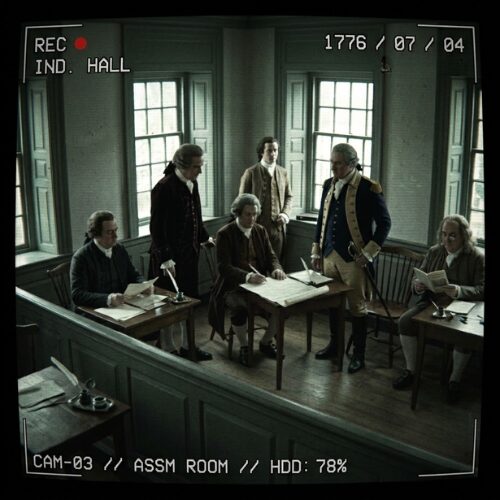
Alert #2: Suspicious Activity at
Independence Hall
July 4, 1776 – 10:17 PM
Location: Philadelphia, Pennsylvania
Alert: Occupancy remains high after normal operating hours.
Status: Multiple individuals still present. Significant document activity detected.
Action: Building secured. Monitoring continues.
Inside Independence Hall, delegates were putting the finishing touches on a document that would change the course of history: the Declaration of Independence. Not every after-hours alert signals trouble. Sometimes history is simply being made.
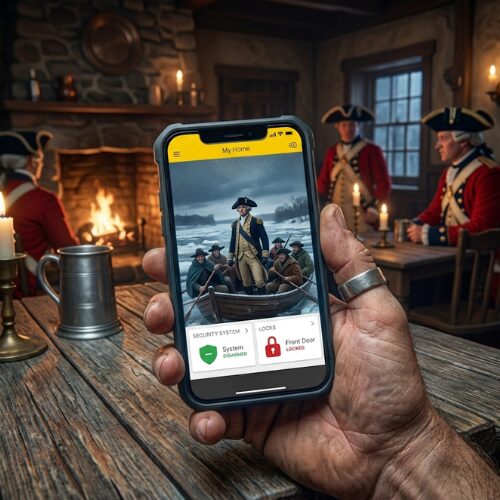
Alert #3: Perimeter Breach
Delaware River Crossing
December 25, 1776 – 11:58 PM
Location: Delaware River
Alert: Multiple vessels detected entering restricted area.
Status: Activity verified.
Action: Authorities notified.
On a freezing Christmas night, George Washington and his troops crossed the Delaware River in one of the most daring military maneuvers in American history. A modern monitoring center might have flagged the unusual activity, but we’re pretty sure Washington would have had authorization.
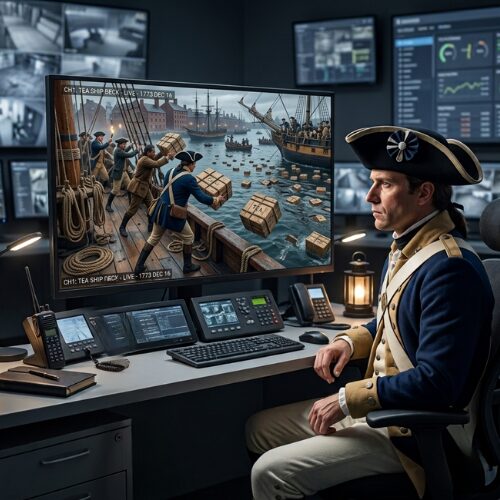
Alert #4: Unauthorized Gathering
Detected at Boston Harbor
December 16, 1773 – 7:43 PM
Location: Griffin’s Wharf, Boston
Alert: Large group activity detected after hours.
Status: Individuals observed boarding merchant ships and handling cargo.
Action: Video recording initiated.
The Boston Tea Party became one of the most famous acts of protest in American history. A modern security camera may have captured every angle, but it’s safe to say this wasn’t your average after-hours activity alert.
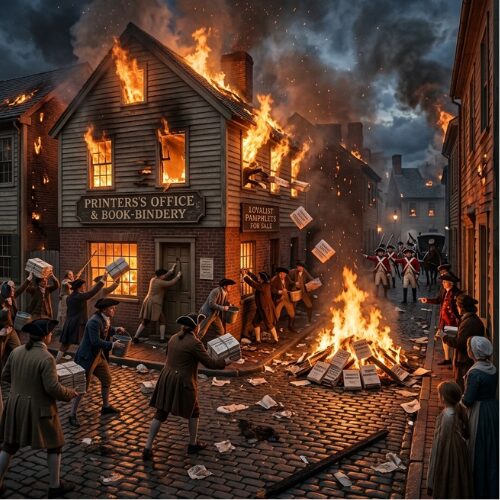
Alert #5: Fire Alarm Activated at a
Colonial Printing Shop
1776 – Philadelphia
Alert: Smoke detected.
Status: Potential structure fire.
Action: Emergency response initiated.
In colonial America, fire was one of the greatest threats to homes, businesses, and entire communities. Buildings were primarily constructed of wood and illuminated by candles, lanterns, and fireplaces. While technology has changed dramatically over the last 250 years, one thing hasn’t: early detection saves property, protects livelihoods, and helps keep people safe.
Protecting What Matters Most Since 1930
The technology may look different today than it would have in 1776, but the mission remains the same.
Whether it’s a family home, a local business, a community institution, or a piece of history, people have always wanted to protect what matters most.
This Independence Day, we’re grateful for those who built our nation—and proud to continue helping protect the homes and businesses that keep it strong.
From all of us at Guardian Alarm, Happy Fourth of July.
