Assisted Living Security: How to Protect Residents, Staff & Your Facility
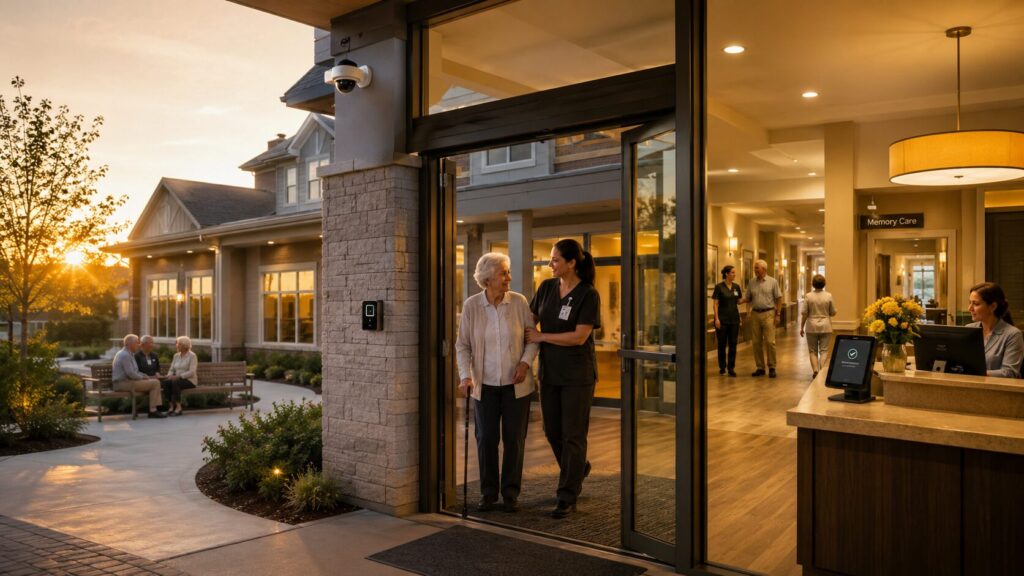
Assisted living communities are responsible for more than keeping a building secure. They are responsible for protecting residents, supporting staff, welcoming families, and maintaining a safe environment around the clock.
That makes assisted living security more complex than a standard commercial security plan.
A good system needs to help prevent unauthorized access. It also needs to support fast response when a resident wanders, a staff member needs help, or an alarm goes off after hours. At the same time, it must respect resident privacy and dignity.
The need is only growing. According to CDC data, the United States has more than 30,000 residential care communities and nearly one million residents. Many residents also need regular help with daily activities, mobility, and memory-related conditions.
For assisted living operators, the takeaway is clear: security should be built around people first, not just doors and cameras.
Why Assisted Living Security Requires a Different Approach
Security in an assisted living community has to account for a wide range of daily activity. Residents move throughout the building. Staff change shifts. Families visit. Medical providers, vendors, contractors, and delivery drivers come and go.
That activity is normal. But it also creates risk.
A resident with dementia may try to exit the building without supervision. A medication room may need stronger access control. A staff member working alone may need a fast way to call for help. A front desk team may need to know who is in the building at any given time.
That is why assisted living security should not rely on one layer of protection. A camera system alone is not enough. A locked front door is not enough either.
The strongest approach combines several layers:
- Access control for sensitive areas
- Video surveillance in common and exterior areas
- Visitor management at entry points
- Intrusion detection for after-hours protection
- Staff duress or worker safety tools
- Fire and life safety systems
- 24/7 professional monitoring
- Clear response procedures for staff
Guardian Alarm provides healthcare security systems that can include access control, video surveillance, intrusion alarms, and 24/7 monitoring through a local UL-certified monitoring center.
The Biggest Security Risks in Assisted Living Communities
Every assisted living community is different. A small residential-style home has different needs than a large senior living campus. A memory care wing has different concerns than an independent living building.
Still, most communities need to plan for a similar set of risks.
Resident Wandering and Elopement
Wandering is one of the most serious safety concerns in assisted living and memory care. Residents with dementia may become confused and try to leave the building. They may not recognize danger once they are outside.
Security systems can help by monitoring exits, sending alerts, and giving staff faster visibility into a possible elopement event. In some communities, delayed-egress systems or wander-management technology may also be appropriate. These systems must be designed around state rules, fire codes, and resident care needs.
The goal is not to make the building feel restrictive. The goal is to give staff more time to respond before a resident is placed in danger.
Unauthorized Access
Assisted living communities often need to welcome visitors while still controlling who can enter certain areas. Family members, healthcare providers, vendors, and delivery drivers may all have legitimate reasons to be on-site.
That does not mean everyone should have the same level of access.
Access control systems can help limit entry to medication rooms, staff offices, mechanical rooms, IT spaces, and resident-only areas. They can also reduce reliance on traditional keys, which are easy to lose and difficult to track.
Modern access control can also support cloud-based management, mobile credentials, visitor systems, and integration with other security tools. Guardian Alarm’s access control solutions are designed to help businesses manage who can enter specific areas and when.
Visitor Management Gaps
A visitor logbook may not be enough for an assisted living environment.
Communities need to know who is in the building, why they are there, and whether any restrictions apply. This can be especially important when there are family disputes, resident-specific restrictions, infection-control policies, or after-hours visits.
A stronger visitor management process may include check-in procedures, badges, staff notifications, and records of who entered the community. When paired with video and access control, visitor management can give administrators a clearer picture of building activity.
Medication Room and Supply Security
Medication storage areas deserve special attention. Unauthorized access can create resident safety issues, compliance concerns, and internal investigation challenges.
Access control can help limit medication room entry to approved staff. Video surveillance near the approach to the room can also provide helpful context if an incident occurs.
The key is to monitor the area without creating privacy issues. Cameras should generally support security and accountability around the space, not capture sensitive resident care activity.
Staff Safety
Assisted living staff often work in emotionally charged situations. They may also work overnight, handle difficult conversations, or respond to urgent resident needs with limited backup.
That makes staff safety a core part of assisted living security.
Worker safety tools, panic buttons, mobile alerts, and monitored duress systems can help staff call for help quickly. This is especially important for employees who work alone or in isolated parts of the building.
Guardian Alarm offers worker safety solutions, including LoneWorkERS, designed to support employees who may need help while working independently or in higher-risk environments.
What an Assisted Living Security System Should Include
A complete assisted living security system should be designed around the building, the resident population, and the way staff actually work.
Here are the most important components to consider.
Access Control
Access control helps communities manage who can enter specific parts of the building. This is one of the most important security layers for assisted living.
Common access-controlled areas may include:
- Main entrances
- Staff-only doors
- Medication rooms
- Administrative offices
- Storage areas
- IT and mechanical rooms
- Memory care exits
For administrators, access control also creates accountability. Instead of wondering who had a key, managers can review access activity and make changes when employees leave or roles change.
Video Surveillance
Video surveillance helps staff and administrators understand what happened before, during, and after an incident.
In assisted living, cameras are often most useful in shared and exterior areas. These may include entrances, lobbies, hallways, parking areas, loading zones, courtyards, and other common spaces.
Camera placement should be thoughtful. Resident privacy matters. Bedrooms, bathrooms, and care-sensitive spaces require special caution and may not be appropriate for video monitoring without specific legal and policy review.
A good video system should do more than record footage. It should make it easier to find relevant clips, review incidents, and support faster response when something happens.
Remote Video Monitoring
Some assisted living communities do not have a full security team on-site at all times. Others have lean staffing overnight.
Remote video monitoring can help fill that gap.
Guardian Alarm’s Virtual Guardian service uses smart video technology and trained analysts to monitor activity, intervene through live voice communication, and help deter threats before they escalate.
For assisted living communities, this can be especially helpful for exterior doors, parking areas, loading zones, and after-hours activity. It can also support faster verification when an alarm is triggered.
Intrusion Detection
Intrusion alarms are still important, especially after hours.
Doors, windows, motion sensors, and monitored alarm points can help protect the facility when fewer people are present. For communities with separate buildings, administrative offices, storage areas, or maintenance spaces, intrusion detection can provide another layer of protection.
When monitored 24/7, these systems can help ensure that alarm events are not missed. Guardian Alarm’s monitoring center responds to intrusion, fire, and carbon monoxide emergencies and can dispatch authorities when needed.
Fire and Life Safety
Fire and life safety systems are critical in senior living environments. Residents may need more time or support during evacuation. Some may not be able to respond quickly to alarms without staff assistance.
Life safety planning should include monitored fire alarms, carbon monoxide detection, emergency communication, and regular testing. It should also account for backup power, evacuation procedures, and staff training.
In assisted living, security and life safety should work together. A door security plan that interferes with emergency egress is not acceptable. A fire alarm procedure that does not account for residents with mobility challenges is not complete.
Staff Duress and Emergency Response Tools
A staff member should not have to search for a phone during an emergency.
Panic buttons, duress devices, and mobile alert tools can help employees call for assistance quickly. These systems can be especially useful for overnight staff, front desk teams, caregivers, maintenance workers, and employees who move throughout the building.
The best systems make the response path clear. When a staff member activates an alert, the right people need to know where the alert came from and what to do next.
How to Build a Layered Assisted Living Security Plan
A layered security plan helps assisted living communities avoid over-relying on one tool.
Start With the Resident Risk Profile
The right system depends heavily on resident needs.
A memory care community may need stronger exit monitoring and staff response workflows. A community with many mobility-impaired residents may place more emphasis on emergency response, fall-related alerts, and clear evacuation planning. A larger facility may need more formal visitor management and access control.
Before choosing equipment, operators should ask:
- Which residents are most at risk of wandering?
- Which areas require restricted access?
- Where do staff feel most exposed?
- What entrances are hardest to monitor?
- Where have incidents happened in the past?
- What does state licensing or fire code require?
This keeps the security plan grounded in real operational risk.
Map the Building by Security Zone
Instead of treating the building as one space, divide it into zones.
For example, the main lobby may need visitor management and video coverage. Medication rooms may need access control and audit logs. Exterior doors may need door contacts, cameras, and alarm monitoring. Parking lots may benefit from video surveillance or remote monitoring.
This approach helps avoid both under-protection and over-surveillance.
Design Around Staff Workflows
A system only works if staff can use it during a busy shift.
If alerts are confusing, staff may ignore them. If visitor check-in takes too long, people may bypass the process. If video footage is hard to retrieve, it may not help during incident review.
Assisted living security should be designed with input from administrators, caregivers, maintenance staff, and front desk teams. These employees understand where problems happen and which processes are realistic.
Connect Monitoring to Response
Monitoring is only valuable when it leads to action.
For every major alert type, the community should know who receives it, who responds, and what happens next. That includes door alarms, intrusion alarms, panic alerts, video alerts, and fire or life safety events.
For smaller communities, 24/7 professional monitoring can provide an added layer of support. For larger campuses, professional monitoring can work alongside on-site teams.
Choosing the Right Security Partner for an Assisted Living Community
Choosing an assisted living security provider is not just about comparing equipment.
The right partner should understand how to design, install, monitor, and service the system over time. Assisted living communities need support after installation, especially when doors fail, cameras go offline, staffing changes, or compliance questions arise.
When comparing providers, ask questions like:
- Do they have experience with healthcare or senior living environments?
- Can they support access control, video, intrusion, and monitoring?
- Do they provide 24/7 professional monitoring?
- Can they service the system locally?
- Will they help design the system around resident safety and staff workflows?
- Can they support future expansion if the community grows?
- Do they provide clear training for administrators and staff?
Guardian Alarm supports healthcare organizations with customized security systems, including access control, video surveillance, intrusion alarms, and monitoring through a local UL-certified monitoring center.
For assisted living communities, that local service and monitoring model can be especially valuable. When resident safety and staff response are on the line, operators need more than equipment. They need a security partner that can help keep the system working day after day.
