
The Retail Loss Prevention Checklist for the Holiday Season
The holiday season multiplies every existing weakness in a store. More traffic, more inventory, more seasonal staff, longer hours, more deliveries and less supervision per transaction.
Nothing new goes wrong. Everything that was already slightly wrong gets worse at volume, and it happens during the weeks when you can least afford to stop and fix it.
Run this checklist in the two weeks before the season starts. Most of it costs nothing.
Sales floor
- Walk the floor and identify every blind aisle created by seasonal displays. Holiday merchandising builds concealment zones that did not exist in October. This is the single most common seasonal gap.
- Check every camera view against the new floor set. Signage, garland, hanging displays and end caps block lenses. View each camera live, on the floor, after the set is complete.
- Move high value, small footprint items to sightline positions or behind glass.
- Verify fitting room controls: limited item counts, attended entry, and staff coverage during peak hours.
- Confirm sightlines from the register to the floor are unobstructed.
- Check exterior lighting at every entrance, including the rear and any service area. Replace anything out before the clocks change.
- Confirm the exit path is observable, including secondary and emergency exits.
Back of house
- Confirm the rear door is on a monitored contact and alarms when propped. This is the highest value single item on the list.
- Audit who currently holds a key or credential to the stockroom and the rear exit. Revoke anything belonging to someone who no longer works here. Do this before you hire anyone new.
- Verify camera coverage of the receiving area, including the point where product crosses from the dock or door into the stockroom.
- Confirm the office and safe area is on controlled access with a log.
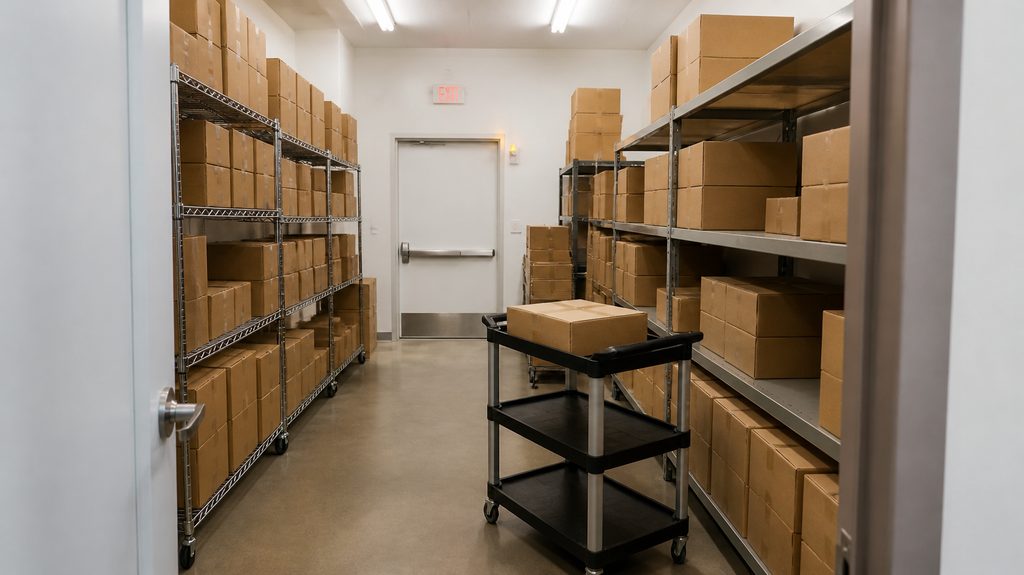
- Clear the stockroom aisles. Overstock creates concealment and makes counts unreliable at exactly the moment counts matter most.
- Check that the trash and recycling area is covered and that nothing can be staged there.
Receiving and inventory
- Set a rule that no delivery is signed for without a count. Post it where receiving happens.
- Increase cycle count frequency on your top loss categories for the season.
- Require two people present for any high value delivery.
- Document vendor access. Vendors restocking their own displays are a routine and rarely audited access path into the back of the store.
- Reconcile receiving discrepancies within 48 hours, not at year end inventory.
Seasonal staffing
- Include loss prevention in seasonal onboarding, as a fifteen minute walkthrough rather than a policy handout nobody reads.
- Set the confrontation policy explicitly. For most retailers the correct answer is observe, describe, report, do not pursue. Say it out loud on day one.
- Assign every seasonal hire a unique credential and point of sale login. Shared logins destroy your ability to investigate anything, and seasonal staff are exactly when this matters.
- Schedule coverage in exposed zones during peak hours rather than concentrating everyone at the registers.
- Pair new seasonal staff with experienced employees on opening and closing shifts.
- Tell staff what to do if they feel unsafe, and mean it.
Cash handling
- Reduce drawer limits and increase drop frequency for the season.
- Confirm camera coverage of the safe and the counting area, positioned for identification rather than area coverage.
- Set a two person rule for deposits and vary the timing and route.
- Review point of sale exception reporting weekly rather than monthly: voids, refunds, no sales, manual discounts and reopened transactions.
- Compare exception rates between employees doing the same job. The outlier is the signal, not any individual transaction.
Opening and closing
- Write the closing sequence down and post it. Doors, lights, alarm set, safe secured, rear door verified, exterior walk.
- Set the alarm system to alert on late close and no close, routed to a manager who will act on it.
- Require a two person close during the season.
- Confirm every staff member with alarm access has their own user code. Shared codes make the event log useless and make false alarm patterns impossible to trace.
- Verify the alarm arms cleanly with no bypassed zones. A bypassed zone on a busy December night is an open door until someone notices.
- Test the signal path to the monitoring center before the season starts, not during it.
Systems check
- Verify every camera is recording, in focus and correctly timestamped. Clock drift across cameras makes a multi camera timeline unusable.
- View every camera at night, not just in daylight. The hours that matter are the ones you have not checked.
- Confirm your retention setting covers the season plus the discovery delay after inventory.
- Test remote access to live and recorded video from a phone off site.
- Confirm your monitoring contact list is current, including who gets called at 2 a.m. and whether they are actually in town.
- Check that fire alarm inspection and testing documentation is current under NFPA 72 before the highest occupancy period of the year.
After the season
- Revoke every seasonal credential and point of sale login on the last day, not the following month.
- Run a full inventory and compare shrink against the same period last year.
- Log which categories moved and adjust next year’s placement and coverage.
- Note which checklist items you skipped and why, so next year’s version is realistic.
The three items that matter most
If you only do three things:
- Revoke credentials for people who no longer work here
- Put a door held open alarm on the rear door and route it to a manager
- Give every seasonal hire a unique point of sale login
All three are free or close to it, and together they close the most common gaps in retail loss prevention.
If you run more than one location
Multi location retailers have a coordination problem that single stores do not, and the season is when it surfaces.
- Send the checklist as a checklist, not as a memo. Require each store to return it completed with a manager’s name and a date. A checklist nobody confirms is a suggestion.
- Standardize the credential and login process across stores. Seasonal hires who move between locations should not accumulate access at every store they cover.
- Set one closing procedure for the whole chain rather than letting each store develop its own. Consistency is what makes an exception visible.
- Compare exception rates across stores, not just within them. A store whose void rate is well above the chain average during peak is telling you something.
- Confirm the monitoring contact list per site. District managers change, store managers change, and the list at the monitoring center frequently reflects neither.
- Verify alarm permit registration for every address. Registration is per address, on separate renewal cycles, and a lapsed registration in one city is easy to miss.
Protecting staff, not just inventory
Loss prevention planning tends to focus entirely on merchandise. The season also raises the risk to the people working the floor: longer hours, tired staff, later closings, dark parking lots and more difficult customer interactions.
Include these in the plan:
- Two person opening and closing, without exception
- Lighting checked on the route from the door to the staff parking area
- Camera coverage of that route
- A clear instruction that staff do not confront or pursue, communicated on day one and repeated
- A defined process for handling an escalating customer situation, including who to call
- Staff walked out together after a late close
A store that plans for merchandise and not for the people handling it has planned for half the risk.
Frequently asked questions
When should we start preparing?
Two to three weeks before the season begins. Anything requiring installation needs longer lead time than that, so scope it in September
Should staff confront shoplifters?
Most retailers set a strict no pursuit policy. Confrontation creates injury and liability risk that exceeds the merchandise value in nearly every case.
What is the single highest value item on this list?
Revoking credentials for departed staff. It costs nothing and it closes the most common open door in retail.
Do we need more cameras for the holidays?
Usually not. Most stores need existing cameras unblocked, refocused and reaimed at exits and concealment points. Start there before buying anything.
How do we handle vendor access during peak season?
Scheduled credentials with expiration dates, a documented sign in, and camera coverage of the area they access. Never a shared code.
